Service delivery backlog plan and economic recovery top of the City’s agenda
29 October 2020
Speech by the City's Executive Mayor Alderman Dan Plato
Speaker, fellow councillors, city colleagues, members of the public, and the media, welcome to this Council sitting.
It has been a tough few months for all of us, and I am proud of all the work that the City of Cape Town and the many caring residents and organisations have done to support our residents most in need since the start of the national lockdown. I am also grateful for the support received from the many consul generals and foreign ambassadors who have come forward with donations and personal protective equipment that we have been able to distribute to residents.
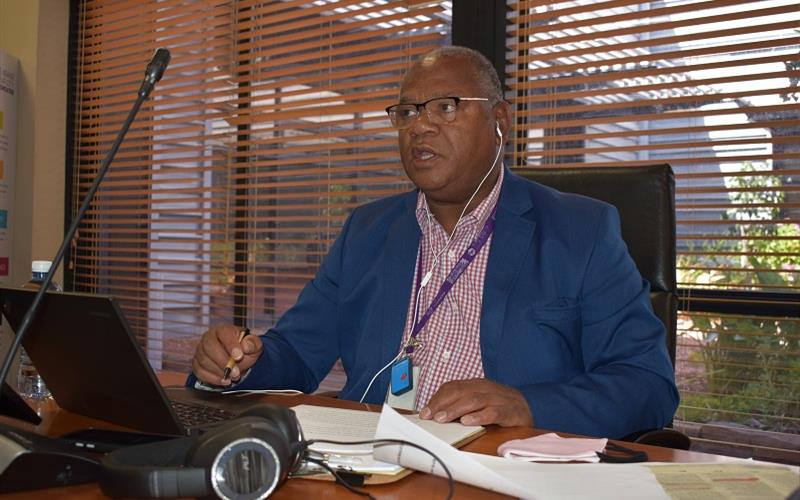
One of those initiatives is the R100 million in financial aid being provided by the German Development Bank and which is on the agenda for noting today. This is not a loan, and is funding used to provide food vouchers and support to communities across Cape Town.
With the harshest regulations of the lockdown being lifted some weeks ago, our borders gradually opening to welcome international guests, and our economy doing all it can to get back on its feet, our focus will continue to be on doing whatever we can to support the economic recovery of our beautiful city.
As the Western Cape Minister of Economic Development, David Maynier outlined in the Provincial and Municipal Economic Review and Outlook just last week – while the recovery will not be easy, the Western Cape’s economy will grow at a faster rate than the national economy. This is the kind of news investors are looking for. It is the kind of news that not only gives one hope, but a determination to do even more to make our recovery the success that it will be.
This type of development does not just happen out of thin air, it is the result of a determined, innovative, pro-active and corruption-free government here in Cape Town and the Western Cape.
As the City, we have to assist in reversing the economic decline through whatever means possible, which is why we have put together five workstreams aimed at various elements of our recovery plan. We are also supporting event organisers as much as we can to ensure that the events sector recovers. This is critical for thousands of people who rely on this industry to make a living and take care of their families.
The five workstreams are:
Regulatory reform - looking at innovative policies that can enable businesses to operate in a safe and attractive manner;
Precinct management with a focus on various initiatives to address crime and grime;
Partnerships to bring all stakeholders together to ensure buy-in and participation for all these interventions;
Events and Activation - aimed at attracting people back to the CBD;
Occupational density - considering the medium to long-term changes that will occur as a result of the changing work patterns and how the City can help the CBD adjust to this new normal.
Another critical aspect of our economic recovery is that the City approved more than 4 500 building plans with a total value of R5,2 billion during the middle of the national lockdown, as the only metro to keep its planning office open during this time. These approvals meant that construction work could resume the second the industry was allowed to re-open and create thousands of jobs and immediately stimulate our economy, which is much needed during these challenging times.
Speaker, one of the developments that demonstrates the value I just mentioned, is the Harbour Arch mixed use development, the single biggest construction development in Cape Town in over a decade. This development will result in approximately 20 000 jobs and an additional 5000 indirect jobs being created. The development will have a significant socio-economic impact with approximately R14 billion worth of capital investment.
I am sure the news that municipalities will now be able to source power independently from Independent Power Producers (IPPs) will be another welcome sign to the business sector that Cape Town is the City best positioned in South Africa to welcome new business and investment. We have fought for these legislative amendments for the benefit of our residents and the rest of South Africa for many years.
Security of energy supply is critical and these amendments are an essential step in this direction. We are still engaging with the national government though to gain clarity on the status of own generation (municipal generation) projects, which is not yet clear.
We have also asked for clarity on the timelines that will apply to the processing of municipal applications by the Department, especially the time for review of feasibility studies. We need this clarification to ensure implementation without lengthy delays.
Further comfort is being given to our residents, business community, and investors, by the water security we have been able to secure following excellent savings and behaviour change displayed by our residents since the worst drought to face our city in recent years. The very welcome rain, together with our residents’ savings, and various interventions by the City means that our dams our now full and we are in a position to provide residents with some rates relief and introduce the lowest tariff structure while maintaining a water-wise approach to our consumption.
Full dams can, however, only provide two years of security, and with concerning changes to our climate, we have had to ensure that we are better equipped to deal with future challenges to our water supply. The City’s New Water Program will see an additional 300 mega litres per day (MLD) of water brought online, through a combination of groundwater abstraction, desalination, and water reuse. The Table Mountain Group Aquifer project is already generating 15 mega litres per day, and volumes will increase incrementally over the next ten years. The New Water Programme is central to our plans to building resilience.
Speaker, while we are all hands on deck to ensure our economic recovery is a success and that we support the business sector and ensure we have the most conducive environment for job creation, we are also very much aware of the service delivery backlogs brought about by restrictions on our operations during the national lockdown. The City’s executive management are very much aware of what is needed to get us back on track, and I have made space in my diary over the coming weeks to check up on the various rapid service delivery roll-out plans we are implementing.
Cape Town is a city known for its excellent road quality, but it is clear that when your hands are tied during one of the rainiest seasons our city has experienced, how quickly the damage can stack up.
Our road maintenance teams were not considered essential services by the national government and were not allowed to work for almost three months during the initial hard lockdown. I asked our Transport directorate how many potholes had been repaired since January to date, and of those, how many were done since June, when our staff were allowed to return to work. Since January until this month, 12 962 pothole repairs were done, with 10 186 of those being repaired since 1 June, indicating, just how much damage had been done during the national lockdown by the heavy winter rains and not being able to deploy our staff.
As you can see, our pothole repair campaign is well under way now, and I will be visiting those areas most affected by potholes over the coming weeks to ensure that the work is of a standard that our residents have always enjoyed. I will also be joining clean-up crews across Cape Town in the coming weeks to ensure that our City is as sparkling clean as we have come to expect.
Next month I will launch the Mayoral Visible Service Delivery Acceleration (MVSA) programme.
The R200 million MVSA programme aims to fast-track efforts to improve the quality, safety and environment of communities in the 23 identified precincts across the metro.
An extensive evaluation of City services in these precincts has been completed. I am hopeful that, together with residents, we can show what these communities can look like. Overall, 80 capital projects have been identified for funding and execution, implementation with more than 200 operational projects to be rolled out.
In the coming weeks, we will:
conclude the appointment of Precinct Managers who will work alongside Area Coordinating Teams on visible service acceleration
deploy additional law enforcement officers to key precincts
rollout cleaning blitzes to deal with grime issues on a targeted basis
Thirteen precincts are to be implemented in the first half of the financial year. These areas include the Bellville CBD, Atlantis CBD, Lotus Park, Bishop Lavis CBD, Bonteheuwel, Hanover Park, Manenberg, Ocean View, Uitsig, Wynberg, Nyanga Urban Node, Monwabisi Park, and Harare.
In the second half, we have projects in the pipeline for the Durbanville Public Transport Interchange, Kraaifontein CBD, Delft, Kuilsriver CBD, Nolungile, Nonqubela, Bo-Kaap, Goodwood and Parow CBDs and also Mitchell’s Plain.
Some projects are already underway at: Monwabisi Park, Lotus Park, Harare, Wynberg CBD, Mitchells Plain Town Centre, Ocean View, Bishop Lavis and Bonteheuwel, Manenberg and Hanover Park. Bellville, Kraaifontein, and Uitsig.
Subcouncils have been engaged and budgets are being put together in line with the scope of the projects still be rolled out. The funding process is expected to be finalised early next year in the adjustment budget period.
Speaker, before I close off today, I want to make a call on all our councillors to please remind residents in their communities that while we are currently in Alert Level 1 of the national lockdown, there is no guarantee that the President won’t re-introduce harsher lockdown levels if the levels of coronavirus infections continue to rise. We don’t need to see this increase if residents just take a few simple precautions, however bothersome they might seem.
We cannot afford to have another harsh lockdown over our busiest tourist season, so please remember to wear your mask when in public, wash your hands regularly, and be responsible.
We know we have been making these calls for a long time already, but they are necessary if we want to ensure our economic recovery is a success.
We have seen other countries go back into lockdown and we don’t want that here. We can limit the spread of the virus if we all work together.
End
Published by:
City of Cape Town, Media Office